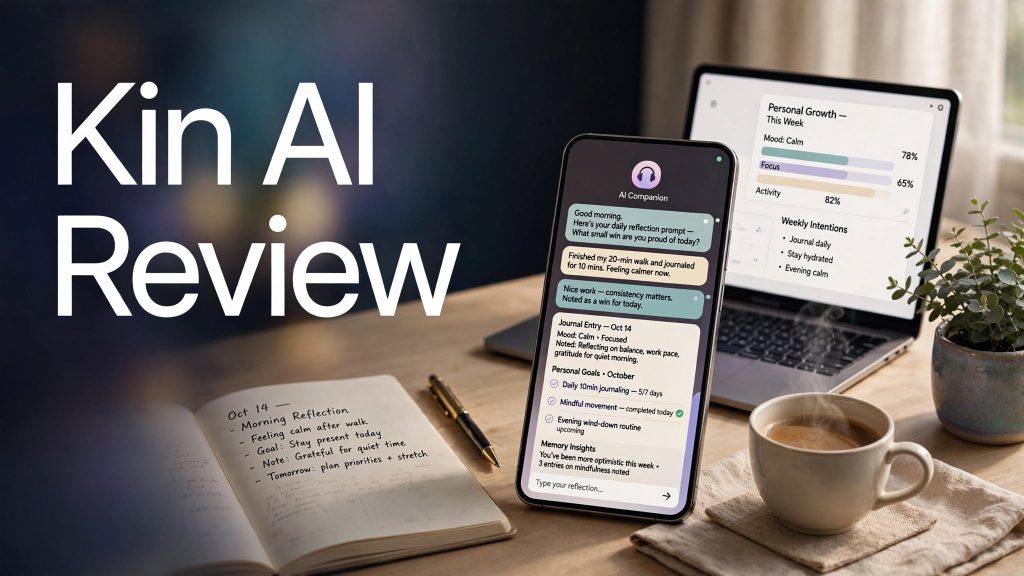
Managing daily decisions, reflecting on personal experiences, and staying focused on your goals can sometimes feel overwhelming. Kin AI is a personal AI assistant designed to help users reflect on their experiences, organize their thoughts, and make more informed decisions through personalized conversations.
Unlike a general-purpose chatbot, Kin combines AI advisors, guided journaling, personal memory, voice conversations, and insights to create a more personalized experience over time.
What Is Kin AI?

Kin AI is a personal AI companion and advisory platform designed to support everyday thinking, self-reflection, and personal development.
Its features include specialized AI advisors focused on areas such as work and productivity, relationships, values, and wellbeing. The platform uses information from conversations and journal entries to provide responses that take previous context into account.
Kin is intended for people who want a more personalized AI experience rather than starting every conversation from scratch.
What Can You Do With Kin AI?
Personalized AI Advisors
Kin provides specialized AI advisors that approach questions from different perspectives. Depending on the available plan, users can access advisors focused on career decisions, relationships, personal values, energy, and social confidence.
These advisors can help users explore ideas, prepare for difficult conversations, and think through everyday challenges.
Guided Journaling
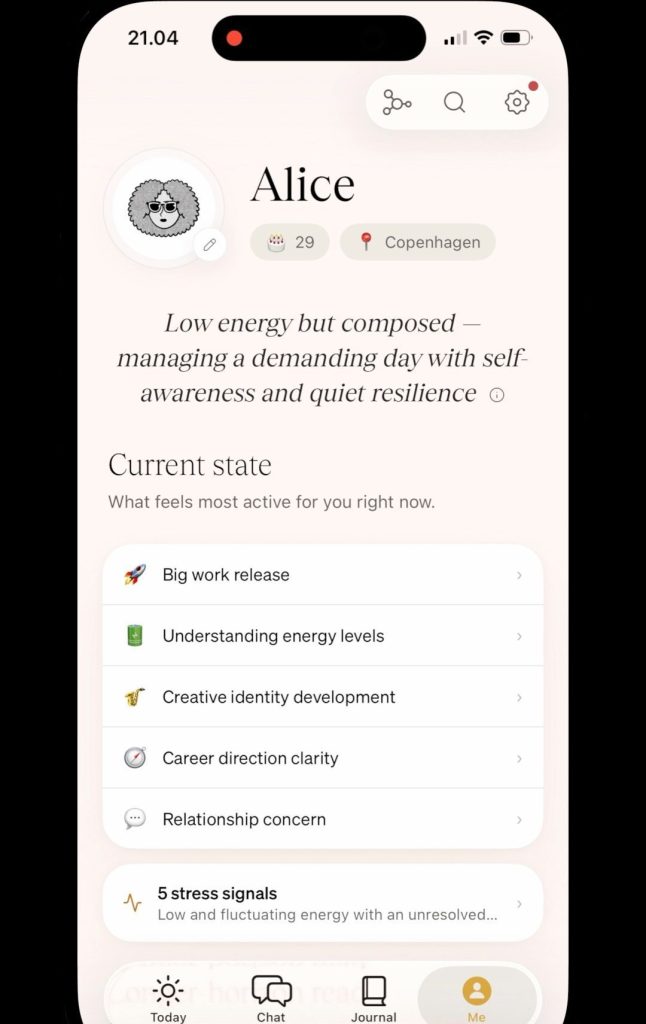
Kin includes a journaling feature that helps users reflect on daily experiences, emotions, decisions, and personal goals. Users can write or dictate their thoughts and revisit previous entries when exploring recurring themes.
Personal Memory and Insights
One of Kin’s key features is its memory system. It uses relevant context from previous conversations and journal entries to personalize future interactions. The app can also surface patterns and observations that may help users reflect on their habits and decisions.
Voice Conversations and Integrations
Kin supports voice-based interactions, allowing users to talk through ideas instead of typing everything. It also offers integrations with supported services, including health-data integrations, depending on the current feature availability and settings.
Kin AI Pricing
Kin offers a free version with limitations on certain features, including advisor access, messaging, and voice usage. A paid subscription unlocks additional capabilities, with exact access depending on the current plan.
The free option can be useful for exploring the app, while a paid plan may be more suitable for users who want regular access to the full set of AI advisors and additional voice and messaging capacity.
Because subscription prices and benefits can change, review the plan displayed in the app before subscribing.
Is Kin AI Easy to Use?

Kin is designed around simple conversations and guided reflection, so users do not need technical knowledge to get started. You can choose an advisor, ask a question, record your thoughts in the journal, or use voice interaction.
Over time, the memory and context features can make conversations feel more connected to your goals and previous experiences.
Privacy is also an important part of Kin’s approach. Its privacy information describes local-first storage and explains how AI requests may be processed through its systems and third-party AI providers. Users should review the current privacy settings and policies before sharing sensitive information.
Kin AI Pros and Cons
Pros
- Personalized AI advisors.
- Guided journaling and self-reflection.
- Memory across conversations.
- Voice interaction.
- Insights into recurring patterns.
- Free version available.
- Designed around privacy and user control.
Cons
- Some features require a paid subscription.
- Free access has usage limitations.
- AI advice may not always be accurate or appropriate.
- Some features depend on integrations and device compatibility.
- It is not a replacement for professional medical or mental health care.
Who Is Kin AI Best For?
Kin AI is particularly suitable for professionals, founders, students, and people interested in personal development and structured self-reflection.
It can be useful when thinking through career choices, preparing for challenging conversations, organizing daily priorities, or developing a journaling habit.
Is Kin AI Worth It?

Kin AI can be worth considering if you want an AI assistant that builds context over time rather than treating every conversation as a separate interaction.
Its combination of advisors, journaling, memory, voice, and personal insights makes it useful for people who want a more structured approach to reflection and everyday decision-making.
The main consideration is how often you will use the app and whether its premium features justify the subscription cost for your needs.
Final Verdict
Kin AI is a personal AI companion designed to support reflection, planning, and everyday decision-making. Its specialized advisors, guided journal, memory system, and voice features distinguish it from a basic chatbot.
If you want a more personalized way to explore ideas, reflect on your experiences, and organize your thoughts, Kin AI is worth exploring.
Frequently Asked Questions
What is Kin AI used for?
Kin AI is used for personal reflection, journaling, conversations with specialized AI advisors, and support with everyday decisions.
Does Kin AI remember previous conversations?
Yes. Its memory system uses relevant information from past conversations and journal entries to personalize future interactions.
Is Kin AI free?
Kin offers a free version with limitations. Additional advisors, messaging, and voice capabilities may require a paid subscription.
Does Kin AI support voice conversations?
Yes. Kin offers voice-based interactions alongside text conversations and journaling.
Is Kin AI a replacement for a therapist?
No. Kin can support reflection and everyday decision-making, but it is not a replacement for a qualified mental health professional or emergency support.