
Finding reliable import-export data can be challenging for businesses trying to identify buyers, discover suppliers, analyze competitors, research markets, and expand internationally. Traditional trade research often involves multiple databases, spreadsheets, government sources, and manual searches.
Volza aims to simplify that process by bringing global trade intelligence, shipment-level data, company information, buyer and supplier research, market analysis, and trade analytics into one platform.
According to Volza, its database covers 200 countries and more than 3 billion shipment-level records, with tools designed for importers, exporters, sourcing teams, sales teams, and market researchers.
But is Volza actually worth the investment?
In this Volza review, we’ll look at its trade data, search tools, buyer and supplier intelligence, dashboards, pricing, APIs, ease of use, customer reviews, pros and cons, and overall value for import-export businesses.
What Is Volza?
Volza is a global trade intelligence and import-export data platform.
The platform helps businesses research international trade activity by searching shipment records and analyzing information related to products, buyers, suppliers, countries, competitors, and markets.
Volza currently says its database covers 200 countries and provides access to more than 3 billion shipment-level records.
The platform is designed for several types of users, including:
- Importers
- Exporters
- Manufacturers
- Sourcing teams
- Procurement professionals
- Sales teams
- Market researchers
- Trade consultants
- Business development teams
How Does Volza Work?
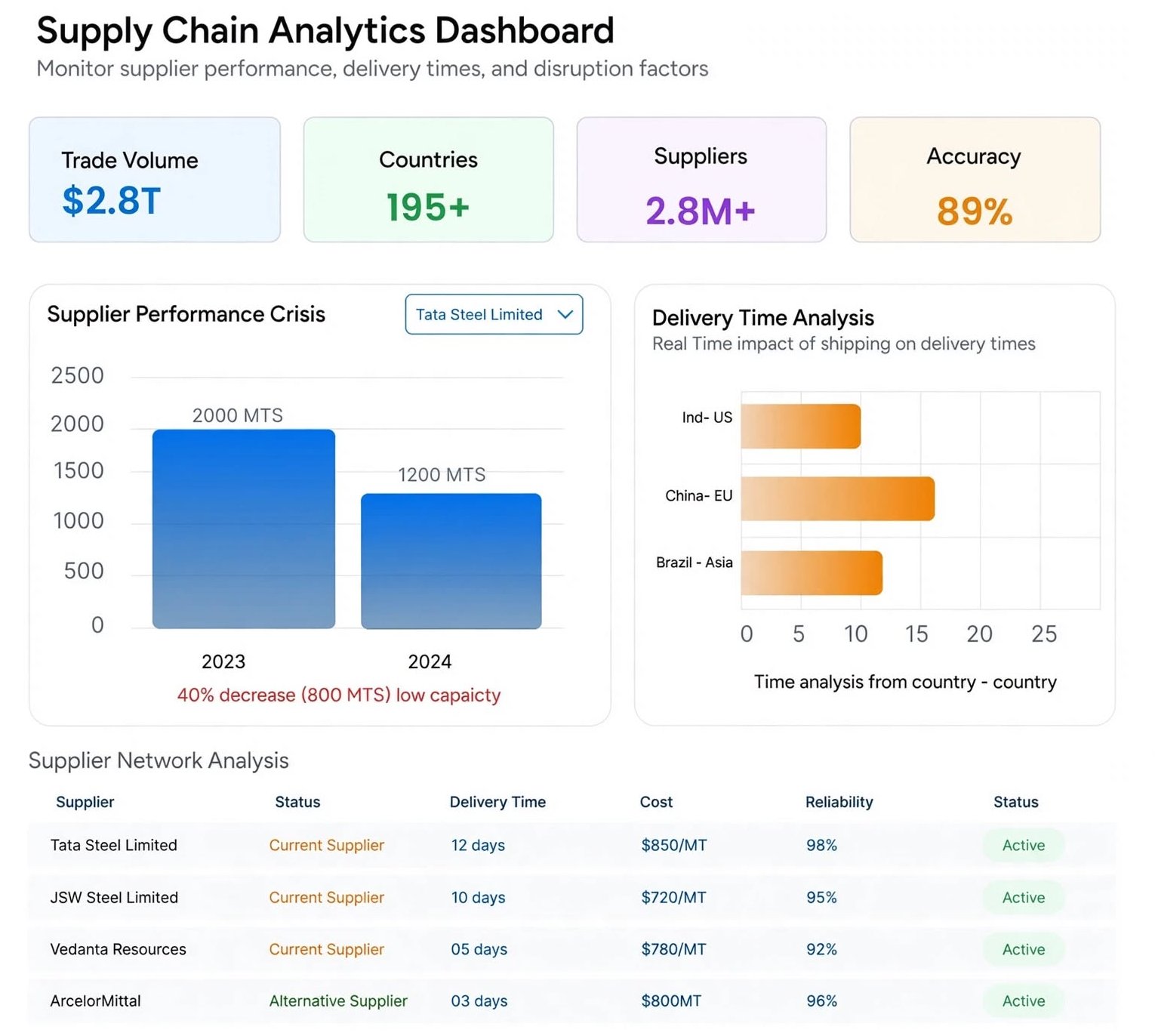
Volza allows users to search global trade data based on information such as products, HS codes, buyers, suppliers, countries, shipment activity, and other trade-related criteria.
The platform’s search system is designed to make large datasets easier to navigate without requiring technical data-analysis skills.
Users can generally follow a workflow like this:
- Choose a product, market, company, buyer, supplier, or HS code.
- Search the relevant trade database.
- Apply filters to narrow the results.
- Analyze shipment and company information.
- Compare markets, buyers, suppliers, or competitors.
- Create dashboards or workspaces.
- Export or use the information for business research.
Volza Features
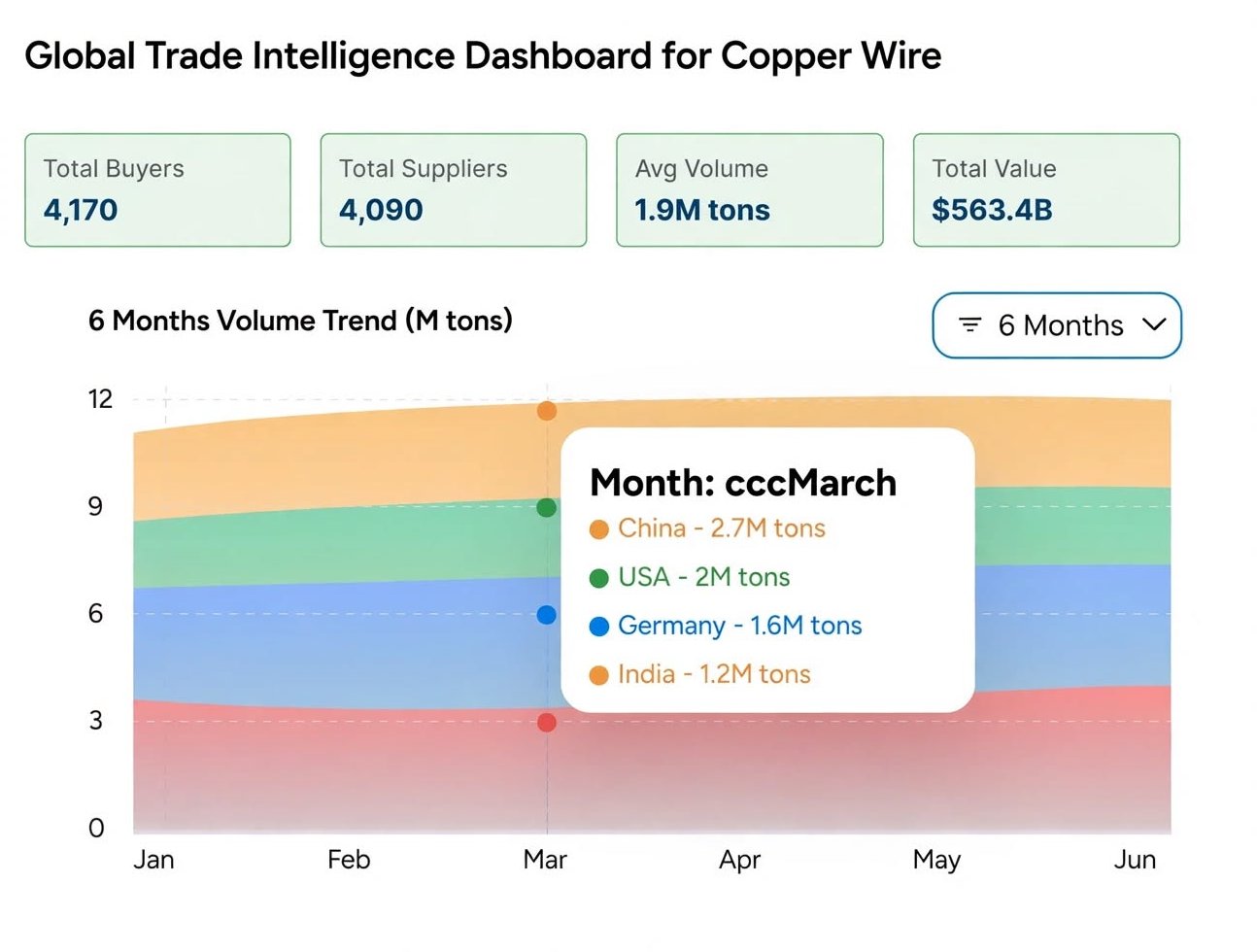
Global Import Export Data
The foundation of Volza is its global trade database.
Volza currently claims access to 3B+ shipment-level records across 200 countries, allowing users to investigate international trade activity across multiple markets from one platform.
This can be particularly useful when researching products that are traded across several countries.
Instead of limiting research to a single market, businesses can compare activity across different regions and identify potential opportunities.
Advanced Search and Filters
Searching a huge trade database can become overwhelming without good filtering tools.
Volza provides advanced filters that allow users to narrow trade information by criteria such as:
- Product
- HS code
- Country
- Buyer
- Supplier
- Shipment volume
- Shipment frequency
- Region
- Trade activity
This makes the platform more accessible to users who may not have technical database experience.
Buyer Intelligence
Buyer research is one of Volza’s key use cases.
Exporters can use trade data to identify companies that are actively importing particular products.
Instead of building a prospect list entirely from general business directories, users can investigate actual trade activity and identify companies involved in relevant imports.
This can help sales and business-development teams focus their outreach on companies with demonstrated activity in a particular product category.
Supplier Intelligence
Volza can also be used to research suppliers.
Businesses can investigate supplier activity, product categories, trade volumes, and buyer-supplier relationships.
This can be valuable when sourcing products internationally or trying to understand the competitive supplier landscape.
Company Profiler
The Company Profiler is designed to provide a broader picture of individual businesses.
According to Volza, users can examine information such as trade volume, product mix, buyer-supplier networks, and financial signals.
This can help companies move beyond individual shipment records and develop a better understanding of potential partners or competitors.
Decision Maker Contacts
Volza also provides a Decision Maker Direct feature.
The platform says users can access verified phone, email, and LinkedIn contact information for decision-makers across thousands of companies.
For exporters and B2B sales teams, this can make the transition from market research to prospecting more efficient.
Market Research
Volza can help businesses analyze demand and competition across different markets.
Users can investigate product activity, shipment volumes, market trends, and country-level trade patterns.
This can be useful when deciding whether to enter a new international market or determine which countries may offer better opportunities for a particular product.
Competitor Analysis
Competitor intelligence is another important use case.
Businesses can research competitor import and export activity to understand:
- Which products competitors trade
- Which markets they operate in
- Which suppliers they work with
- Which buyers they serve
- How shipment activity changes over time
Dashboards and Visualizations
Volza doesn’t only provide raw shipment data.
The platform includes dashboards and visualizations designed to make trade information easier to interpret.
According to Volza, users can visualize buyer changes, supplier trends, product momentum, pricing benchmarks, and competitor activity.
This can make large datasets easier to understand, particularly for teams that need to present trade research internally.
Alerts and Automation
Volza provides an alerts system that can notify users about activity involving specific buyers, suppliers, markets, or keywords.
This means users don’t necessarily have to perform the same search manually every time they want to monitor a market.
The platform also offers custom fields and auto-update functionality for organizing and segmenting incoming trade data.
Workspaces
Volza’s workspace functionality allows users to organize their research.
Depending on the subscription, businesses can create multiple workspaces for different products, markets, clients, or research projects.
This can be particularly useful for agencies and teams working on several trade-research projects at the same time.
Data Export
Volza provides options for downloading and working with trade data.
Its official site describes the platform as allowing users to filter information and create working dashboards that can be downloaded and analyzed.
For businesses that need to combine trade intelligence with internal spreadsheets or reporting workflows, export functionality can be important.
Volza Pricing
Volza uses a subscription and credit-based model, with different plans designed for startups, small businesses, and larger organizations.
Its current pricing page lists a Free Trial, Startup, SME, and Corporate plan.
Free Trial
Volza currently offers a $0 Free Trial option.
The current plan includes:
- All countries
- Unlimited searches subject to available credits
- Unlimited workspaces subject to available credits
- Limited shipment access
- Unlimited contact-profile downloads subject to credits
- 10 phone and email contacts
Startup Plan
The Startup plan is currently listed at $1,500 annually.
It includes:
- 108 countries
- 4,800 searches per year
- 75 workspaces
- Moderate shipment limits
- 1,000 contact-profile downloads
- 150 phone and email contacts
SME Plan
The SME plan currently costs $4,500 annually.
It includes:
- All countries
- Access to premium countries
- Unlimited searches
- 300 workspaces
- Higher shipment limits
- 10,000 contact-profile downloads
- 450 phone and email contacts
Corporate Plan
The Corporate plan currently costs $9,600 annually.
It includes:
- All countries
- Premium-country access
- Unlimited searches
- 600 workspaces
- Higher shipment limits
- 22,000 contact-profile downloads
- 1,000 phone and email contacts
How Does Volza’s Credit System Work?
Volza also uses credits or points for certain data access and downloads.
The number of points deducted can vary depending on the country and database. Volza gives the example that one point can be deducted for a shipment download in India or the United States, while some other countries can require more points per shipment.
This means businesses should understand the credit requirements for the countries and datasets they use most frequently before selecting a plan.
Volza APIs
Volza is not limited to its web platform.
The company also provides Trade Intelligence APIs that can integrate trade data into CRM, ERP, or other software systems.
The current API offering includes global trade data, country-specific trade data, supplier insights, company information, and decision-maker information.
Volza currently lists Global Trade API pricing starting at $0.10 per search, with data costs starting from $0.02 per record.
For businesses that want to incorporate trade intelligence into their own applications or internal workflows, API access can be a significant advantage.
Is Volza Easy to Use?
Volza is designed to make large trade datasets accessible through a visual search and dashboard interface.
The platform emphasizes smart search, filters, dashboards, and self-service analysis rather than requiring users to work directly with raw databases.
This can make it easier for business users who understand their products and markets but don’t necessarily have advanced data-analysis skills.
However, the sheer amount of information available through a trade-intelligence platform can create a learning curve.
New users may need some time to understand filters, shipment records, credits, dashboards, and the different research tools.
Volza also promotes onboarding, training, and customer support to help users get familiar with the platform.
Volza for Exporters
Exporters are among the users most likely to benefit from Volza.
The platform can help exporters identify companies that import specific products, investigate potential markets, research competitors, and discover decision-makers.
Instead of contacting completely cold prospects, exporters can use trade activity to identify companies that already participate in the relevant product market.
This can make international lead generation more targeted.
Volza for Importers
Importers can use Volza to research suppliers and understand sourcing patterns.
A business looking for new suppliers can analyze which companies are exporting a particular product and compare their trade activity.
The platform can also help identify alternative suppliers and examine supplier networks.
Volza for Market Research
Volza can be particularly useful for market-research projects involving international trade.
Businesses can investigate:
- Market size indicators
- Shipment trends
- Buyer activity
- Supplier activity
- Product movement
- Country-level demand
- Competitive activity
Volza for Sales and Lead Generation
B2B sales teams can also use Volza as a prospecting tool.
The combination of trade activity, company intelligence, and decision-maker contacts can help sales teams identify companies that may have a genuine commercial reason to buy a product.
This is especially useful for exporters and manufacturers targeting international customers.
However, trade activity should be treated as a qualification signal rather than a guarantee that a company will become a customer.
Volza Customer Reviews
Customer feedback about Volza is mixed but generally positive overall.
At the time of this review, Volza has a 3.8/5 TrustScore on Trustpilot from 73 reviews, with 52% of reviews rated five stars and 27% rated one star.
Positive reviewers commonly mention the platform’s useful trade data, market research capabilities, buyer and supplier information, ease of use, and customer support.
Recent reviewers have described Volza as useful for export-market analysis, identifying potential buyers, finding shipment data, and researching specific products and HS codes.
There are also negative reviews. Some customers have raised concerns about pricing, data availability, subscription experiences, or refund issues. One recent reviewer specifically reported dissatisfaction with data availability and an unresolved refund request. Volza publicly responded to that review.
The mixed feedback suggests that businesses should evaluate the exact countries, products, and datasets they need before purchasing a higher-priced subscription.
Volza Pros and Cons
Pros
- Global trade data covering 200 countries
- 3B+ shipment-level records claimed by the platform
- Import and export intelligence
- Buyer and supplier research
- Company profiling
- Decision-maker contact information
- Advanced search filters
- Market and competitor analysis
- Dashboards and visualizations
- Alerts and monitoring
- Multiple workspace options
- API access
- Free trial available
- Useful for exporters, importers, and sourcing teams
Cons
- Paid plans can be expensive
- Credit requirements vary by dataset and country
- Large datasets can take time to learn
- Data availability may vary between markets
- Some customer reviews raise concerns about pricing or subscription experiences
- Trade data may still require independent verification before important business decisions
Is Volza Legit?
Yes. Volza is a legitimate trade intelligence platform focused on global import-export data and business research.
The platform identifies itself as a UAE-based market research company and states that its trade data comes from sources including customs departments, trading authorities, government agencies, nonprofit organizations, and private data partners.
Volza also provides a public API offering, multiple subscription tiers, customer support, and a substantial collection of customer reviews.
That said, legitimate does not automatically mean every dataset will be equally useful for every country or product. Businesses should validate the data coverage relevant to their specific research needs.
Is Volza Worth It?
Volza can be worth it for businesses where international trade intelligence directly supports revenue, sourcing, sales, or market research.
For an exporter trying to identify potential buyers, an importer researching suppliers, or a market-research team analyzing international trade, the platform can save significant time compared with manually collecting information from multiple sources.
The biggest question is whether the value of the data justifies the subscription cost.
The Startup plan at $1,500 annually may be reasonable for a business actively using trade data, while the $4,500 SME and $9,600 Corporate plans are aimed at organizations with much larger research requirements.
For occasional users, the cost may be difficult to justify.
For companies that regularly use import-export data for prospecting, sourcing, or market expansion, the potential time savings and commercial value can make Volza more compelling.
Who Should Use Volza?
Volza is best suited for:
- Importers
- Exporters
- Manufacturers
- International wholesalers
- Procurement teams
- Sourcing professionals
- B2B sales teams
- Market researchers
- Trade consultants
- Business-development teams
- Companies entering international markets
- Agencies conducting trade research
Who Might Not Need Volza?
Volza may not be the right choice if you:
- Rarely work with international trade data
- Only need basic company information
- Have a very small research budget
- Don’t need shipment-level data
- Only operate in one small market
- Need occasional rather than continuous trade research
Volza vs Traditional Trade Research
Traditional import-export research often involves searching multiple government databases, trade directories, company websites, spreadsheets, and other sources.
Volza’s advantage is that it attempts to bring these trade-intelligence workflows together in one platform.
Its search engine, dashboards, company profiles, buyer and supplier intelligence, alerts, and APIs can reduce the amount of manual work required.
For teams performing international market research regularly, this centralized approach can be considerably more convenient.
Final Verdict: Is Volza Worth It?
Volza is a powerful option for businesses that rely on import-export intelligence, shipment data, buyer research, supplier discovery, and international market analysis.
Its biggest strengths are its broad country coverage, large shipment database, specialized trade-intelligence tools, buyer and supplier research, dashboards, alerts, and API capabilities.
The platform is particularly valuable for exporters trying to find buyers, importers looking for suppliers, sales teams researching prospects, and businesses evaluating new international markets.
The main drawback is price. With paid plans starting at $1,500 annually and higher tiers costing several thousand dollars per year, Volza is primarily a business research platform rather than an inexpensive data tool.
Customer feedback is also mixed enough that prospective subscribers should carefully evaluate the coverage and data availability for their specific countries and products before committing to an expensive plan.
Overall, Volza is worth considering if trade intelligence is an important part of your sales, sourcing, or market-expansion strategy. For businesses that only need occasional trade information, the cost may be harder to justify.
Frequently Asked Questions
What is Volza used for?
Volza is used for global import-export research, buyer and supplier discovery, market analysis, competitor research, shipment intelligence, and international business development.
How many countries does Volza cover?
Volza currently states that its database covers 200 countries.
How much trade data does Volza have?
Volza currently claims access to 3B+ shipment-level records across its global trade database.
Is Volza free?
Volza currently offers a $0 Free Trial with limited shipment access and credit-based features. Paid plans include Startup, SME, and Corporate tiers.
How much does Volza cost?
The current annual pricing listed by Volza is $1,500 for Startup, $4,500 for SME, and $9,600 for Corporate.
Can Volza help find buyers?
Yes. Volza provides buyer intelligence tools designed to help exporters identify companies involved in importing particular products. It also offers decision-maker contact information on eligible plans.
Can Volza help find suppliers?
Yes. Businesses can use Volza’s supplier intelligence and trade data to research companies involved in exporting particular products and investigate supplier networks.
Does Volza offer an API?
Yes. Volza offers trade-intelligence APIs for integrating global and country-specific trade data, company information, supplier insights, and other intelligence into business systems.
Is Volza legitimate?
Yes. Volza is an established trade-intelligence and market-research platform with global trade data, paid subscriptions, APIs, customer support, and a substantial customer-review history.